Etiquette
What to Bring to a Potluck When You Can't (or Won't) Cook
The grocery store is a kitchen. You're just outsourcing the labor.
It is Friday afternoon. You are at your desk. You remember that on Sunday you are going to someone's house, the someone is hosting a potluck, you have not thought about this until exactly this moment, and you do not cook.
This is fine. Take a breath. The grocery store is open. The grocery store knows what to do.
I have been to seventy-two potlucks. I have brought roughly seventy-two store-bought items. I am not embarrassed about it. You shouldn't be either.
Store-bought is real food
There is a soft cultural shame around buying things instead of making them. The shame is fake.
The host who invited you wanted you there. They did not write a screening test. They did not specify "must have made it from scratch with seven ingredients you grew in a window box." They said "come, bring something." What they meant, mostly, was: contribute, show up, eat with us.
The contribute part is the easy part. The show-up part is the harder part. You are showing up. You are nine-tenths of the way there. The rest is just picking up something good on the way.
The defaults that never let you down
Memorize this list. It will get you through the next ten years of being invited to things.
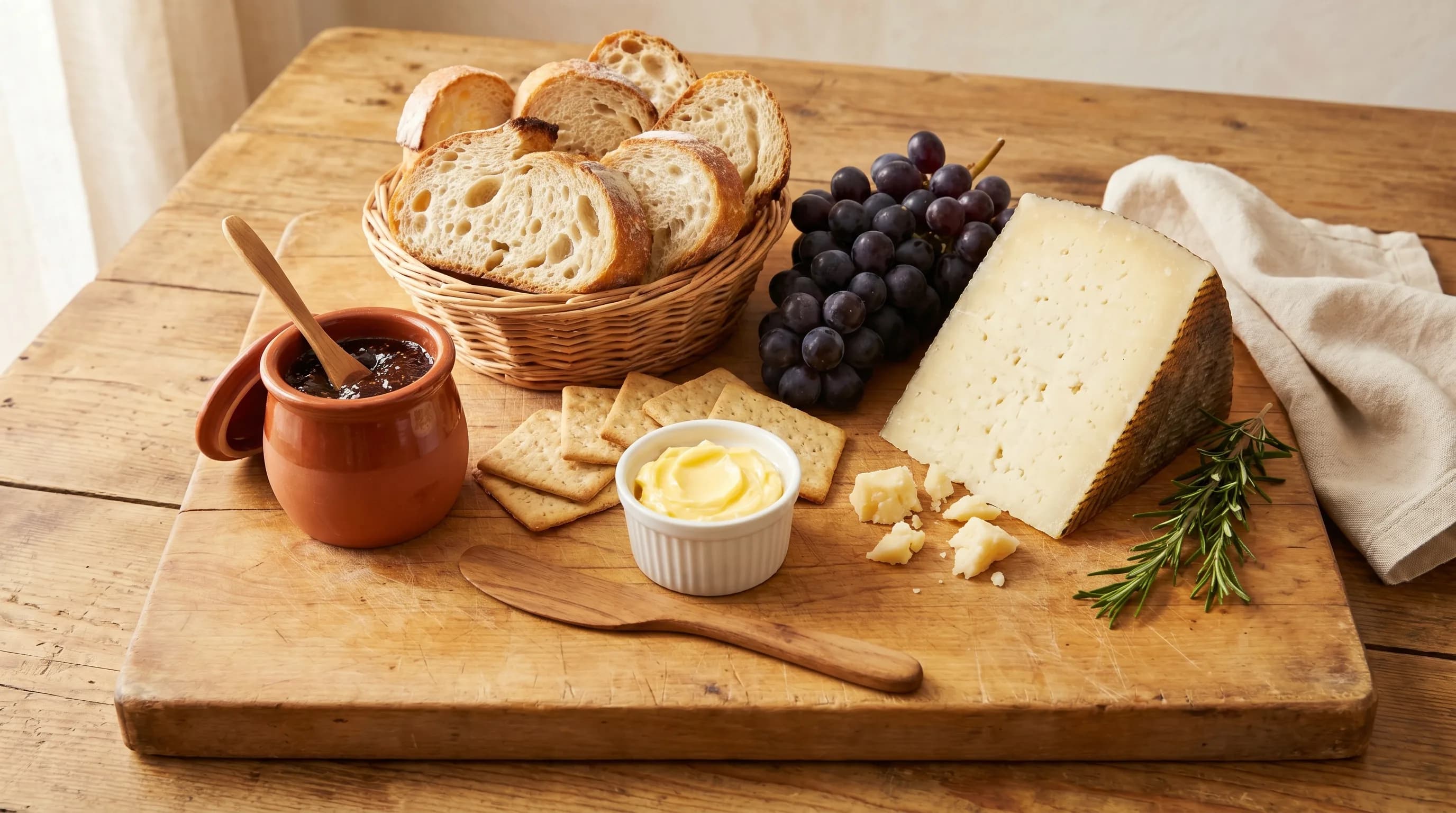
- A really good loaf of bread + good butter. The bread should not be the cheap one. The butter should be the kind that comes in foil, not the tub. Together they cost twelve dollars and feed everyone.
- One nice cheese. Not three. One excellent wedge says "I picked this." Three medium ones say "I panicked at the cheese counter."
- A bottle of wine you would actually drink. Not the gas-station one with the cartoon animal on the label. If you wouldn't pour it for yourself, don't pour it for them.
- Ice. Somehow always forgotten by everyone, including the host. You will be the hero.
- Flowers. When you genuinely have nothing else to bring. Pick simple ones, unwrap them in the car, hand them over with both hands. You're a thoughtful person now.
- A really good store-bought dessert. A bakery pie. A box of nice cookies. Ice cream and one good topping. The host has been cooking for two days. They want someone else to be in charge of the sweet thing.
- Fresh fruit, if it's perfect. Strawberries in May. A bowl of cherries in July. A perfect ripe melon. Wash, plate, done.
How to make store-bought feel like you tried
This is the trick. Most of the work happens in the last sixty seconds before you ring the doorbell.
Pull it out of the package. Whatever it is. Brie out of the plastic, bread out of the bag, crackers out of the box. The grocery-store packaging is the tell. Get rid of it before the host sees it.
Use a real plate or cutting board. Bring one if you need to. A wooden board for cheese. A real plate for cookies. A glass bowl for fruit. The container makes the contribution feel like a thing, not a takeout order.
Garnish. A sprig of rosemary on the cheese board. A pinch of flaky salt on the butter. A drizzle of good olive oil over the bread. Ten seconds, complete transformation.
Walk in like you brought it on purpose. Confidence is the seasoning. If you carry the cheese plate in like you've been planning this all week, nobody asks if you made it.
You cooked. The grocery store was your sous chef.
What never to bring
Some moves are worse than bringing nothing. Don't do these:
Anything fragile. A cake you frosted in the car. A pavlova. A tower of anything. There is always a moment when the dish meets a doorway, and the doorway wins.
The third bottle of cheap wine. If you don't know what people are bringing, default to one bottle of something good rather than three of something sad. Quality counts here.
Surprise food the host didn't ask for. A whole second main course. A vat of soup at a sit-down dinner. The host has a plan. Don't reroute it.
Anything that needs the host's kitchen for thirty minutes. They don't have thirty minutes. Their oven is full. Bring it warm or bring it cold or don't bring it.
Anything you wouldn't eat yourself. If you wouldn't put it on your own plate, the host doesn't want it on theirs.
A small ask of the host
If the host hasn't sent a sign-up sheet, ask if they have one. (And if you are ever the host, the modern potluck playbook makes that sheet the easy part.) A real sheet (with categories, with what's already claimed, with what's still open) saves you the guesswork and saves them the "what should I bring?" text three days out.
You'll see what's open, pick something, plate it like you mean it, and walk in.
The thing you came for
The host wanted you there. Not your culinary effort. Not your secret recipe. Not the skills you don't have.
Bring something good. Plate it like you mean it. Show up on time. Help clear the table at the end.
You are the bread-and-butter person now. It is, genuinely, a fine thing to be.