Hosting
The Modern Potluck Playbook: How to Plan One Without the Group-Chat Chaos
A field-tested playbook for hosting a potluck that doesn't burn out the host.
The potluck went wrong before anyone showed up.
Two people brought salad. Nobody brought bread. The host had been texting individually all week, trying to keep track in her head, and by Saturday morning she'd lost the thread on whether "I'll bring something" meant a side or a dessert. She made too much pasta as backup. The pasta sat untouched because three other people had also decided to bring backup pasta.
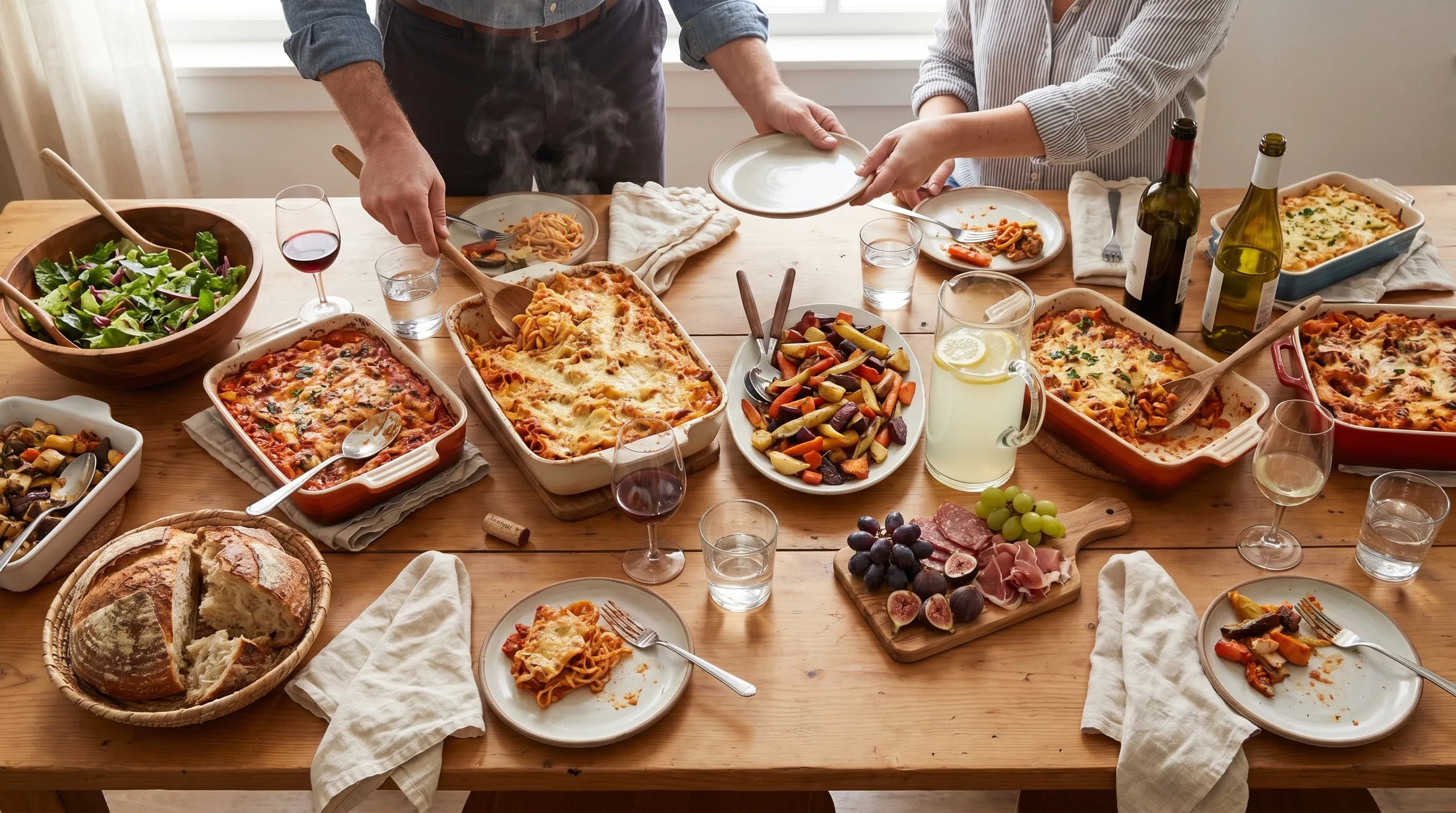
Everyone had a great time, and the host spent the next morning quietly resentful while putting away seven mostly-full casserole dishes.
This is the most common potluck story. It is also avoidable. Not by hosting harder. By doing a little bit of structure upfront so the day of is just cooking and showing up.
This is the playbook I wish I'd had ten years ago. It's organized roughly in the order you'll do things. Skim it, steal what's useful, ignore the rest.
If you'd rather skip the rest of this and just start a sign-up sheet, start one here. The playbook will still be here when you come back.
1. Decide what kind of potluck this is
Before you do anything else, before the invite, before the menu, answer one question: what shape is this?
The three most common shapes:
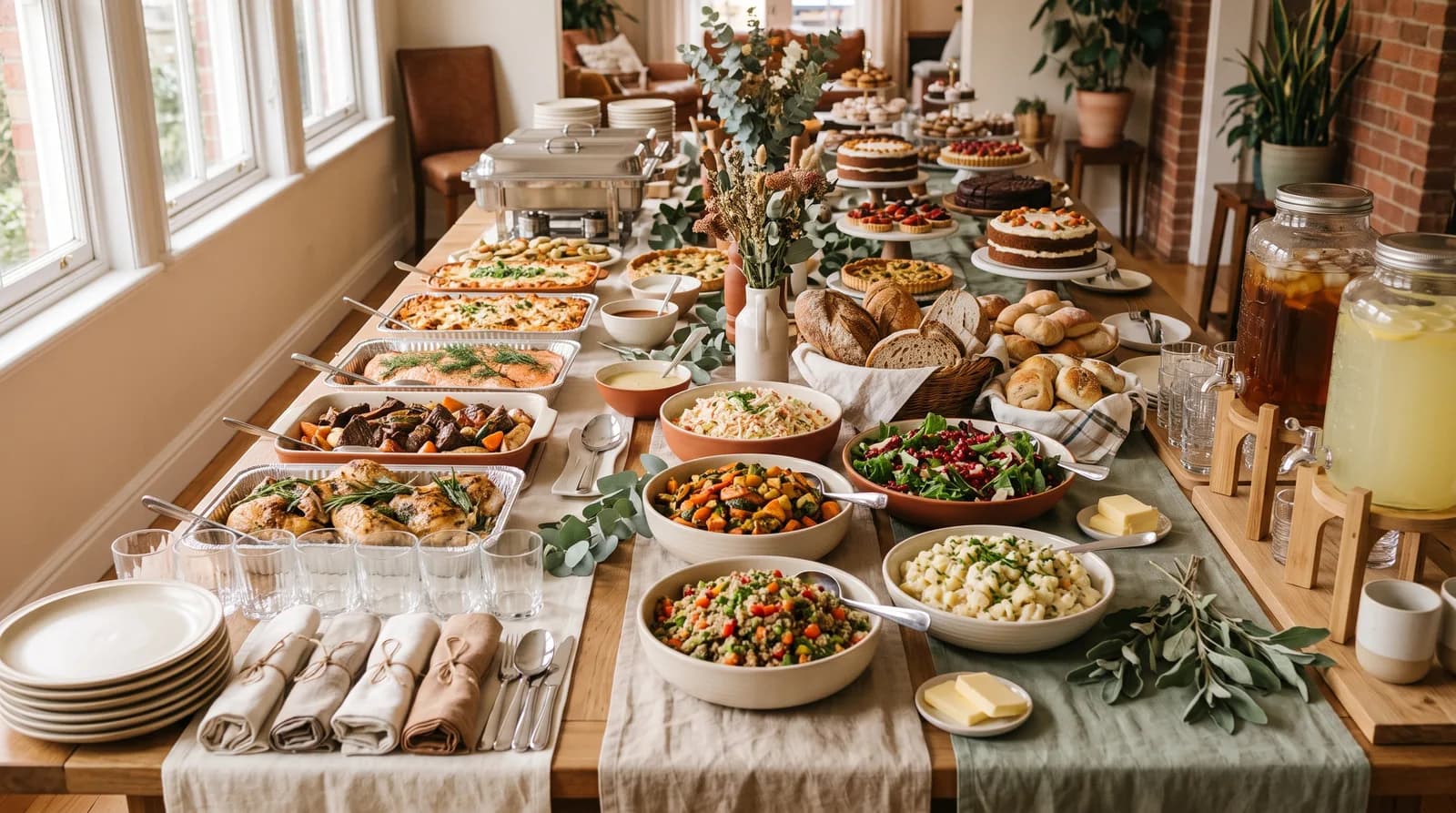
- Casual drop-in. People come and go. Food is grazed, not plated. Think open house, post-game, holiday open-door. Low-formality, runs 3+ hours, no fixed seating. Sign-up is loose: "bring something to share."
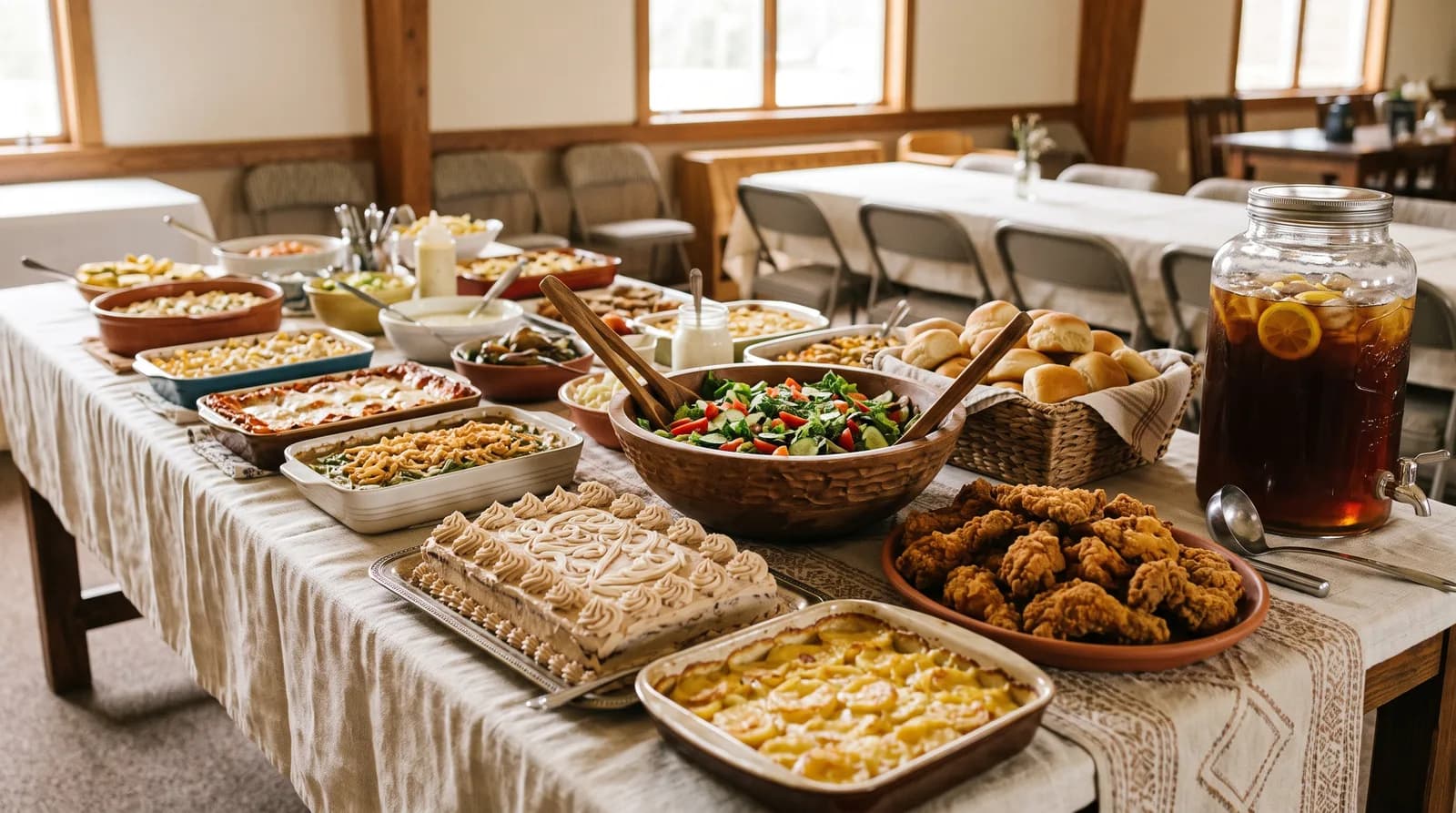
- Sit-down meal. Everyone arrives within a window, sits at a table, eats one meal together. Higher coordination, runs 2–3 hours, fixed start time. Sign-up is structured: appetizer / main / sides / dessert / drinks.
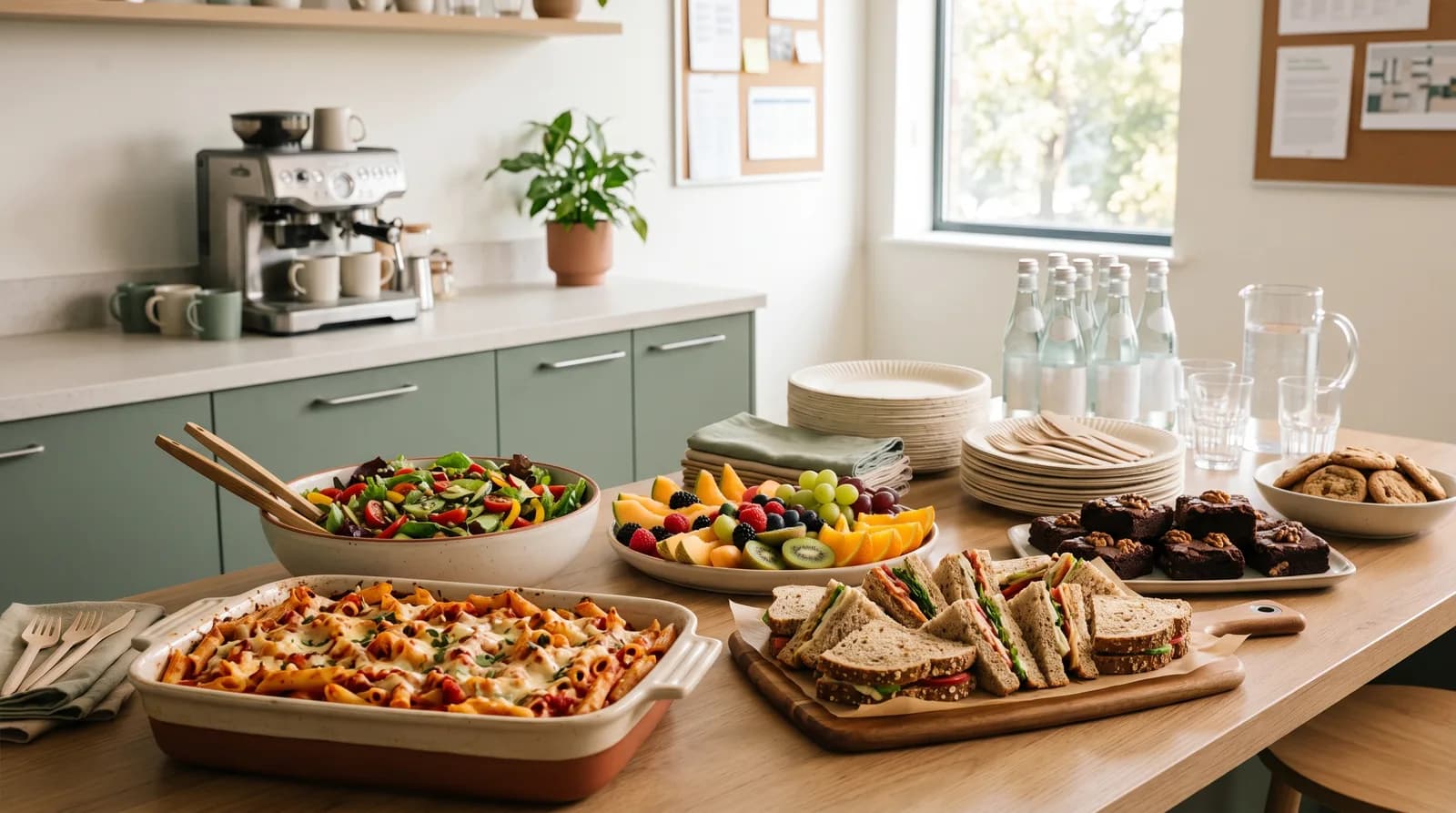
- Picnic or outdoor. Travel-friendly food, things that won't wilt or spoil. No oven on-site (or limited), no microwave. Sign-up has to flag what needs to stay cold.
These look similar from the outside but coordinate completely differently. A casserole that needs thirty minutes in a 350° oven works at a sit-down meal. It is a disaster at a picnic.
The other question hiding in here: is there an anchor dish? Sometimes the host makes the main (lasagna, ham, brisket) and guests fill in around it. Sometimes everyone brings something and there is no main. Both work. But you have to decide before you invite, because the invite needs to say it. "I'll do the chili, can you bring sides + dessert?" is a different request than "bring whatever feels right."
Naming the shape upfront saves three rounds of follow-up texts. Promise.
2. Build the invite list before you build the menu
It's tempting to start with the menu. Picture the table, plan the dishes, then figure out who can come. Skip this. The menu is shaped by who's coming and how many of them, not the other way around.
Two numbers to commit to first.
How many people you want there. Be honest with yourself about your space. A house that seats six at the table can do twelve standing-and-grazing, but it cannot do twelve sit-down. Knowing your real capacity prevents the resentful Tetris of trying to fit one more chair.
The 70% rule. Not all yeses show. Casual potlucks run around 70%. For every ten yeses, expect seven or eight to actually walk in. For sit-down meals it's higher (closer to 85%) because the social commitment is bigger. Plan food quantity around the expected number, not the optimistic yes count.
Then think about plus-ones and kids, in advance, in writing on the invite. "Adults only" and "kids welcome, we have a backyard" and "bring a +1 if you want" are all valid. Pick yours and say it on the invite. This saves the day-of text ("is it ok if I bring James?") that you don't want to answer while you're plating.
3. The sign-up sheet, and why it has to be a real one
This is the thing most potlucks get wrong. The sheet is the difference between a potluck that comes together and a potluck where two people brought salad.
A real sign-up sheet has four properties.
Categories before items. Not a flat list. Group your asks: appetizer / main / sides / dessert / drinks / supplies (plates, napkins, ice). People scan to where they have a contribution and pick from there. A flat "what to bring" list creates analysis paralysis.
Quantities matter. "Salad for 8" beats "salad." "Two bottles of wine" beats "wine." Specificity removes the question of whether what you're bringing is enough, and it prevents the situation where four people each bring a small bowl of olives.
Dietary flags up front, not at the door. Not as a free-text afterthought. A small set of common flags is plenty: vegetarian, vegan, gluten-free, nut-free, dairy-free. Guests with restrictions look at the sheet first, confirm something is going to work for them, and tell you ahead of time if nothing does. This is also when you find out about "oh by the way Jamie's bringing his new partner, she's vegan." Three days out, not at the door.
One central place. Not a group chat. A group chat is a wonderful place to share a photo of the salad you're planning. It is a terrible place to coordinate eight people across nine days. Pick one home for the sign-up: a shared link, a digital sheet, anything that has persistence and visibility for everyone. The host should not be the source of truth.
A few things not to put on the sheet:
- Anything that needs your kitchen for thirty minutes when guests are arriving. Reheating in the oven is fine. Cooking from raw is not.
- Anything that has to travel and survive (delicate cakes, pavlovas, towers of anything). You'll find a triangle of frosting on the back seat of someone's car.
- "Surprise me" or "anything you want." This is a kindness you're doing for the guest who would otherwise stand in front of the grocery store at 3pm second-guessing every aisle. Give them a category, not the whole world.
If you want a sheet that already does the categorization + dietary flags + quantities for you, PitchInDish is built for exactly this. Or a shared spreadsheet works too. Just don't make it the group chat.
4. Day-of: your job is to host, not to plate
The morning of the potluck, the work is mostly not cooking. It's setting the room so guests can serve themselves and each other while you're busy being a host.
A few things that punch above their weight:
Set the table the night before. Yes, the night before. Plates, glasses, silverware, serving utensils. Light the candles right before guests arrive. A pre-set table reads as warmth. It also means you're not pulling forks out of the drawer at 6:02 PM.
Designate a drop zone. When guests arrive holding casserole dishes, they need somewhere to put them. Without a drop zone, they stand in the middle of your kitchen looking lost while you try to clear counter space one-handed. A four-foot stretch of counter, one square foot of fridge, and a clear spot on the dining table is enough. Tell people where it is when you open the door.
Pre-stage the boring stuff. One extension cord near an outlet. One trivet near the sink. Two cutting boards on the counter. A roll of paper towels somewhere visible. This sounds specific because it is. These are the small frictions that otherwise turn into the host running around mid-party.
Forgive what doesn't happen. Someone will arrive late. Someone will arrive with the wrong thing, or a dish they didn't pre-claim. Someone will text you at 5:45 PM saying they can't make it. The party doesn't need any of these to go smoothly. Smile, redirect, move on. The host who can roll with the late dish is the host people want to come back to.
5. The leftover handoff
This is where most potlucks break: the dishes go home with the wrong people, or don't go home at all, and the host ends up cleaning and storing six casserole dishes for a month while trying to remember whose Tupperware is whose.
Three rules.
Have containers ready before guests arrive. Deli quarts (the clear plastic pint and quart containers Chinese takeout comes in) beat Tupperware in every way. They're cheap, they stack, you don't care if they come back, and they're translucent so people can see what's in them. A fifty-pack from a restaurant supply store is fifteen dollars and lasts a year.
"Take some" beats "do you want some." Most people don't want to seem greedy. They'll politely say "oh, no, I'm fine." This is a lie. They want some. Just put a container in their hand and say "take this home." Permission delivered, awkwardness avoided.
The dish-return rule. Anything that arrives in someone else's container leaves with food in it, OR leaves clean. Don't let serving dishes pile up on your counter for "later." Later means "you're storing six casseroles for a month while trying to figure out whose is whose." Wash, return, done. If someone insists their dish stays, label it with painter's tape so you know whose it is.
6. After the party, two messages
Most hosts skip this part. Don't.
A thank-you, within forty-eight hours. Group thread or individual messages, your call, depending on how the group communicates. Doesn't have to be long. "Thank you for showing up, and for the bread, Maya, it was perfect." What this does, beyond being kind: it lowers the social bar for next time. People who feel appreciated at potluck #1 say yes faster to potluck #2.
Photos, if you took any. A shared link that everyone in the group can see. The party that lives on in a photo gets remembered. The one that doesn't fades into "yeah that was fun, I think." These take ninety seconds to share and pay back for years.
The third thing, for you, not for anyone else, is to write down what you wished you'd done. Future-you, planning the next one, will be grateful.
The short version
For the screenshotters:
- Decide the shape. Casual drop-in / sit-down / picnic. Pick one before anything else.
- Invite list first, menu second. Plan around real capacity + the 70% rule.
- Set kid + plus-one rules in writing on the invite. Saves the day-of texts.
- Sign-up sheet with categories, quantities, dietary flags. One central place, not a group chat.
- Set the table the night before. Designate a drop zone. Stage the boring stuff.
- Forgive late arrivals, missing dishes, surprise +1s. Roll with it.
- Have deli quarts ready for leftovers. "Take some" beats "do you want some." Return dishes the same night.
- Send a thank-you and the photos. Two messages, lifelong returns.
The thing nobody tells you
The work of making a potluck feel effortless mostly happens before anyone shows up. The decisions, the structure, the small kind clarity that lets eight people contribute without negotiating with each other.
You can do all of this in your head, or in a group chat, or on a paper sheet on the fridge. It will mostly work. It will also exhaust you, and slowly, you will stop wanting to host.
Or you can let some of the structure live somewhere designed for it. That's why we built PitchInDish, so the upstream work happens once, and the day-of is just cooking and showing up. If that sounds good, start a sign-up sheet here.
The lasagna's on you.