Etiquette
Dietary Restrictions at a Potluck: A Guest's Guide to Not Making It Weird
Whether you're the one with the restriction or the one cooking around it, the fix is the same: a little information, shared early.
I have been to seventy-two potlucks. At a meaningful number of them, someone stood quietly at the edge of the table doing the math on whether they could eat anything, and decided the polite move was to say nothing and go hungry.
This is the thing about dietary restrictions at a potluck: almost nobody handles them badly on purpose. The vegan doesn't want to be a project. The host with the nut allergy doesn't want to police the dessert table. The person who brought the dish has no idea it's a problem because nobody told them. Everyone is being considerate, and the result is still a person eating three crackers for dinner.
The fix isn't more rules. It's a small amount of information, shared a little earlier than feels natural. Here's how to do that from whichever side of it you're on.
If you're the guest with the restriction
The instinct is to keep quiet so you're not a hassle. Resist it. Quiet is what creates the problem.
Tell the host when you RSVP, not when you arrive. "Can't wait. Heads up, I'm gluten-free, but please don't go to any trouble, I'll bring something I can eat" is the whole script. Said three days out, it's useful information. Said at the door while they're plating, it's a small crisis. The timing is the entire difference between considerate and awkward.
Then actually bring something you can eat. This is the move that makes the restriction a non-event. Bring a real dish, enough to share, that fits your needs. Now you're not hovering hopefully over the one safe bowl; you brought the safe bowl, it's good, and other people are eating it too. You've turned your restriction into a contribution.
Don't quiz the host about every dish at the table. It puts them on the spot and they often won't know, because half the food was made by other people. Scan, ask quietly about the one or two things you're unsure of, and lean on what you brought. You came to see people, not to audit a buffet.
Lower the stakes out loud. "I'm easy, I brought my own backup, don't worry about me" frees the host from worrying about you, which is the actual gift. A guest who's visibly fine is a guest the host can relax about.
If you're the one who brought a dish
You don't have to cook for every diet on earth. You just have to make it possible for people to make an informed choice about your dish.
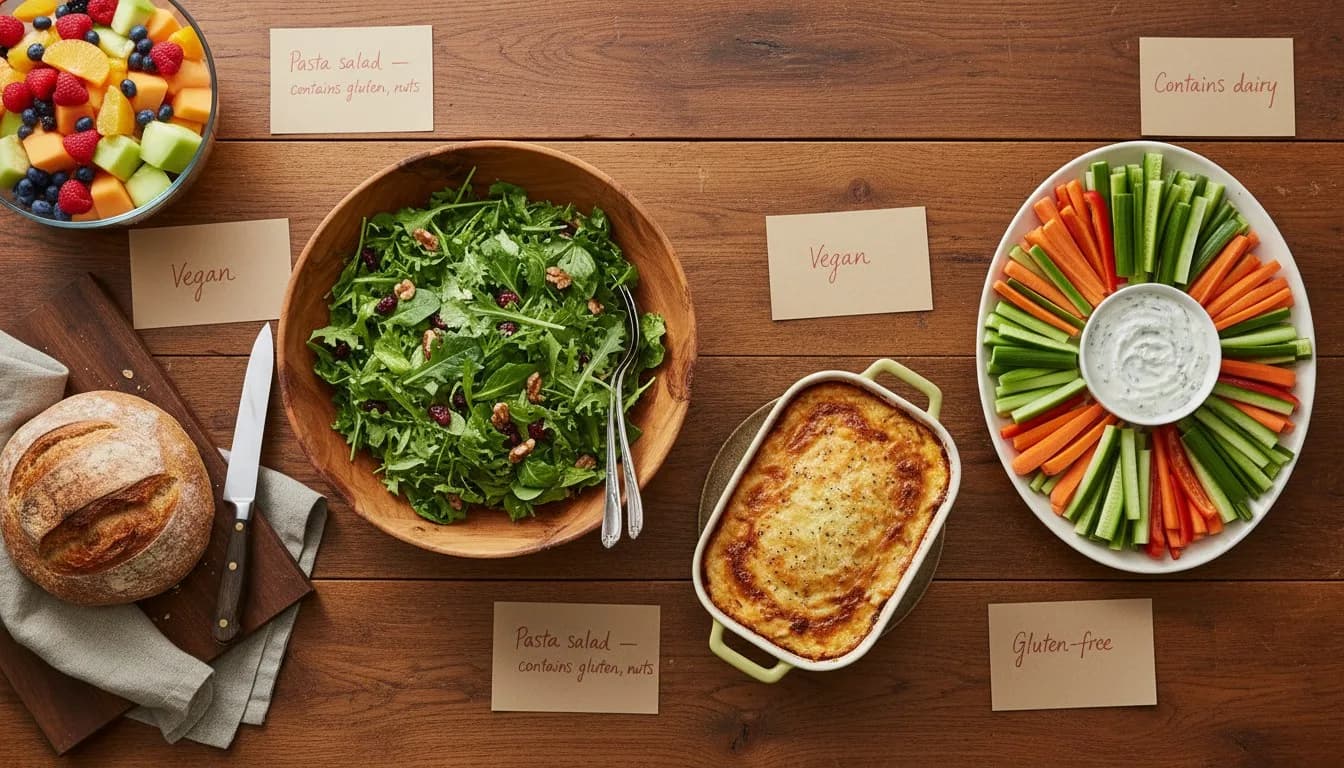
Label it. This is the single most useful thing you can do, and it takes ten seconds. A little card or even a folded scrap of paper: the dish's name and the things people most need to know. "Pasta salad, contains gluten, has nuts in the pesto." That card lets the gluten-free person and the nut-allergic person decide for themselves instead of guessing or asking around.
Know your own ingredients, especially the hidden ones. The allergens that get people are rarely the obvious ones. It's the fish sauce in the dressing, the butter in the "vegetable" side, the chicken stock in the soup that looked vegetarian, the nuts ground into the sauce. If you made it, you're the only one who knows what's actually in it. That knowledge is worth writing down.
If you can make one easy swap, do it, but don't torture yourself. Sometimes a dish is just as good with olive oil instead of butter, or with the nuts on the side instead of mixed in. When the swap is free, take it; you've quietly made your dish work for more people. When it isn't free, don't ruin the dish; just label it honestly and let people choose.
If you're the host
You can't personally guarantee every dish is safe for every guest, and you shouldn't try to. What you can do is set the table up so the information flows.
Ask on the invite. One line, "any allergies or dietary needs I should know about?", surfaces the restrictions early, while there's still time to plan around them. People will tell you if you ask. They usually won't volunteer it if you don't.
Use a sign-up sheet that shows what's in each dish. This is where a real sheet beats a group chat badly. When guests claim a dish and note what it is, everyone can see the spread taking shape, and the person with celiac can see at a glance that yes, there are two things they can eat, before they even arrive. A sign-up sheet with structured dietary flags lets people add their dish and note what's in it, so the information lives in one place instead of scattered across texts you'll never find again. It is the same sheet at the heart of the modern potluck playbook.
Aim for a couple of safe options, not a perfect table. You don't need every dish to be vegan and gluten-free and nut-free. You need a few things that the people you invited can actually eat. Know your guests, make sure their needs are covered somewhere on the table, and let the rest be the rest.
Don't make a big production of it. The kindest version of accommodating someone is the quiet version. A labeled table and a couple of safe dishes do the work without anyone being singled out as The Person With The Allergy. Nobody wants a spotlight on their restriction. They just want to eat dinner like everyone else.
The allergy thing is not the etiquette thing
One line to keep separate from all of the above: a serious food allergy is not a preference, and "a little won't hurt" is not true. For a genuine allergy, cross-contamination is real: the same serving spoon between two dishes, the crumbs of the nut thing landing in the safe thing. If someone tells you their allergy is serious, believe them, keep their safe dish a little apart, and give it its own spoon. This is the one place where casual doesn't cut it.
What it all comes down to
Dietary restrictions only get awkward when they stay secret. The guest who hides it, the cook who didn't label it, the host who didn't ask: three considerate people accidentally building a table where someone can't eat.
Say it early. Bring your own backup. Label what you made. Ask one question on the invite. None of it is hard, and all of it adds up to the same good outcome: everybody at the table gets to fill a plate, nobody feels like a burden, and the meal is just a meal.
That's the whole etiquette of it. Share a little information, a little ahead of time, and the problem mostly disappears before it starts.